

While millions attend India’s festivals as spectators, discerning travellers experience them as privileged cultural insiders—with private palace viewings, intimate royal audiences, and access that transforms ancient celebrations into deeply personal journeys. These aren’t merely events marked on calendars; they’re rare windows into living traditions, spiritual practices unchanged for millennia, and cultural pageantry that reveals India’s soul in ways no museum or monument ever could. For those seeking luxury India festivals as the centrepiece of a thoughtfully orchestrated journey, the question isn’t simply when to visit—it’s how to gain the kind of access that elevates attendance into genuine cultural immersion.
The difference between watching a procession from barricaded streets and experiencing it from a maharaja’s private balcony, between navigating festival crowds and observing sacred rituals alongside temple priests who’ve become your personal guides—this is the threshold where standard travel ends and bespoke cultural privilege begins.
Why India’s Festival Calendar Defines the Ultimate Luxury Timing Strategy
India’s festival calendar operates on lunar rhythms and agricultural cycles that predate modern tourism by thousands of years. These aren’t performances staged for visitors; they’re authentic expressions of devotion, harvest gratitude, and community celebration that happen to coincide with moments when the cultural veil grows deliciously thin. For the luxury traveller, understanding this calendar becomes strategic rather than merely informative—because the most exceptional heritage properties, the private festival access points, and the cultural guides worth their considerable expertise all require advance planning that standard itineraries simply cannot accommodate.

Heritage palace availability during major festivals requires 12-18 months’ advance booking. Royal estates that open private wings during Holi or Dasara confirm reservations annually for the following year—often to returning families who’ve cultivated these relationships across generations.
The distinction between attending and experiencing manifests in countless subtle ways. Anyone can witness Varanasi’s Dev Deepawali from the public ghats, shoulder-to-shoulder with thousands. Exclusive festival experiences India offers something entirely different: a private boat positioned where the Ganges curves just so, with a personal priest who explains each ritual element, while classical musicians perform on the boat behind you and the riverbank temples glow like amber constellations. This level of curation doesn’t happen spontaneously—it emerges from relationships with temple authorities, heritage families, and cultural custodians who understand that authentic access requires both respect and proper protocol.
Why the extended timeline matters: bespoke festival travel India isn’t about purchasing tickets to events. It’s about securing private wings at palace hotels that only accommodate eight suites during festival season, arranging personal audiences with royal family members who maintain ancient ceremonial roles, and coordinating with cultural experts whose calendars fill eighteen months ahead. The logistics alone—chartered helicopters timed around ceremony schedules, private venue access requiring security clearances, heritage home invitations contingent on proper introductions—demand the kind of orchestration that separates genuine luxury travel from merely expensive tourism.
Holi in Rajasthan: Private Celebrations Beyond the Crowds
Holi in India’s popular imagination means colour-drenched chaos in Delhi’s streets or Mathura’s temple squares—exuberant, certainly, but far removed from how royal families and heritage estates actually celebrate the spring festival. The luxury iteration unfolds within the courtyards of properties like Samode Palace, where the Maharaja’s family still presides over intimate morning ceremonies using organic colours ground from flowers and herbs cultivated in the estate gardens. Here, Holi becomes what it was always meant to be: a celebration of spring’s arrival, marked with music, traditional sweets prepared in palace kitchens, and the kind of unhurried joy that’s impossible when navigating tourist crowds.
The experience begins days before the festival itself, with pre-Holi cultural immersion that contextualises what you’re about to witness. Private classical music performances in palace durbar halls—ragas specifically associated with spring and renewal, performed by maestros who’ve played for these families for decades. Traditional miniature painting workshops where Rajasthani artists demonstrate the painstaking technique of creating the colours Holi celebrates. Visits to artisan communities where you’ll learn how different flowers produce different hues, how turmeric and indigo become the yellows and blues of celebration, and why these natural pigments matter both culturally and practically.
Bespoke logistics transform the physical experience entirely. You’re not staying at a city hotel and fighting festival traffic; you’re resident in a heritage palace suite where the celebration comes to you. Chartered helicopter transfers between properties—perhaps beginning Holi week at Samode, then moving to Neemrana for a different regional variation—mean you experience multiple interpretations of the same festival without the grinding overland journeys. Personal photographers document moments you’ll be too immersed to capture yourself. Post-celebration, Ayurvedic wellness protocols at properties like Amanbagh ensure the organic colours wash away gently while spa treatments address the physical exertion of enthusiastic celebration.
The most profound festival experiences happen not in public squares but in private courtyards, where ancient celebrations unfold as they have for centuries—unhurried, authentic, and graciously shared with guests who’ve earned the privilege of presence.
Pushkar Camel Fair: Curated Access to Rajasthan’s Trading Spectacle
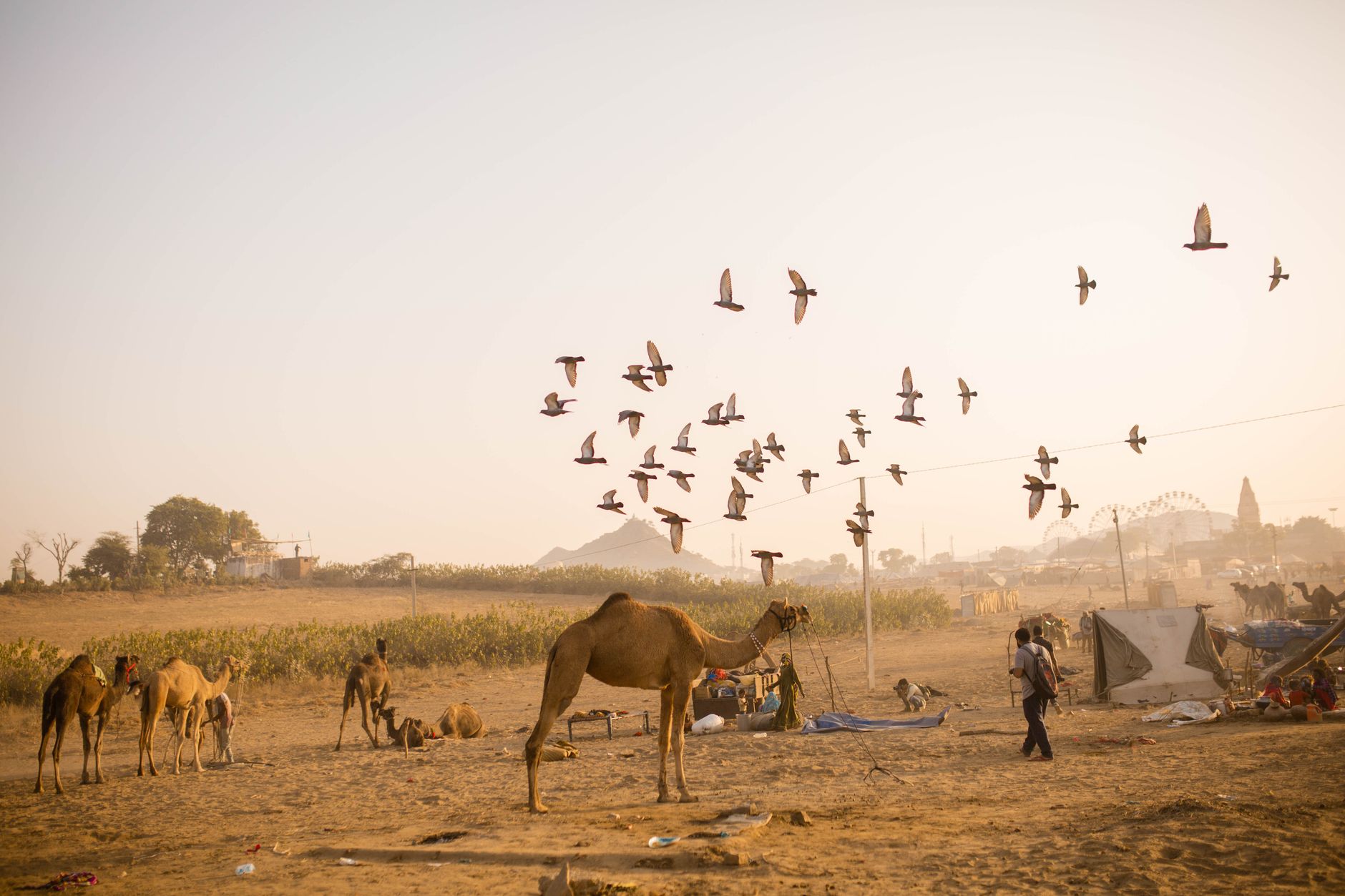
Pushkar’s annual camel fair represents something increasingly rare: a genuinely functional livestock market that predates tourism by centuries, where Rajasthani herders and traders still conduct serious business even as visitors photograph the spectacle. The luxury approach recognises this duality—respecting the fair’s authentic commercial purpose while providing access that transcends the standard fairground experience. VIP desert encampments positioned away from the main tourist zones offer butler service, climate-controlled tents with proper bedding and ensuite facilities, and private viewing platforms overlooking the camel races and trading activities without contributing to the crush.

What elevates the experience into genuine cultural territory: private sunrise balloon flights that reveal the fair’s massive scale from above, the geometric precision of thousands of camels arranged by traders, the surrounding desert stretching copper and rose toward the Aravalli hills. Chartered access to tribal villages where the herders actually live, arranged through longstanding relationships that ensure your presence benefits the community and your interactions carry depth rather than superficiality. Intimate audiences with traditional livestock traders—men who can assess a camel’s lineage at a glance, whose families have traded at Pushkar for eight or ten generations, who’ll explain the nuances of breeding, training, and the cultural significance of particular camel varieties with the kind of expertise that transforms observation into education.
The genius of proper Pushkar curation lies in seamless integration with the broader Rajasthan luxury circuit. You don’t simply fly into the fair and fly out; you arrive via a meticulously paced journey that might include the Oberoi Udaivilas in Udaipur, RAAS Jodhpur’s architectural magnificence, and Sujan Jawai’s remarkable wildlife experiences—each property connected by private charter, each transition timed to maximise the specific qualities of light and season that make November in Rajasthan so visually arresting. Your personal guide maintains continuity throughout, building knowledge and rapport that deepens with each conversation, each shared observation, each perfectly timed pause for chai while watching sunset paint the Lake Palace gold.
Mysore Dasara: Royal Heritage and Private Palace Protocol
Mysore’s Dasara festival represents the last surviving example of how Indian princely states once celebrated—with royal processions, temple ceremonies, and palace rituals that continue under the patronage of the Wadiyar family despite their official status having dissolved with Independence. For luxury travellers, this creates extraordinary opportunities: exclusive access to Mysore Palace’s Durbar Hall during private ceremonies, personal viewings of the illuminated palace after public hours when the building’s facade glows with nearly 100,000 light bulbs, and—where schedules and protocol permit—personal introductions to family members who maintain these traditions as cultural custodians rather than ruling monarchs.
The bespoke cultural layer surrounding Dasara makes the festival itself even more resonant. Private classical music concerts at heritage venues like the Jaganmohan Palace Art Gallery, where Carnatic vocalists perform ragas associated with the goddess Chamundeshwari, whose temple crowns Chamundi Hill above the city. Traditional silk weaving demonstrations at workshops producing the legendary Mysore silk sarees—you’ll watch master weavers work golden zari thread into patterns that take weeks to complete, understanding why these garments appear in royal processions and why their creation represents an art form rather than mere manufacturing. Curated temple visits with Vedic scholars who can decode the Sanskrit inscriptions, explain the theological significance of specific rituals, and contextualise how Dasara’s ten-day celebration maps onto deeper spiritual narratives about good’s triumph over evil.
Strategic luxury positioning around Mysore creates a journey rather than merely a festival visit. The Taj Bangalore provides sophisticated urban comfort before or after the celebration. Evolve Back Kabini, ninety minutes south, offers post-festival wildlife extensions where you’re tracking leopards and wild elephants through teak forests that once served as royal hunting preserves—a thematic extension of Mysore’s heritage narrative. Private charter between properties eliminates the tedium of Indian road travel. Your dedicated heritage specialist guide—likely someone with advanced degrees in Indian history or cultural studies, whose expertise extends far beyond standard site explanations—ensures every element connects into a coherent understanding of Karnataka’s royal legacy and living traditions.
Varanasi During Dev Deepawali: Sacred Ganges in Illuminated Grandeur
Varanasi on any evening presents one of Earth’s most profound spiritual tableaux—the ancient ghats descending to the Ganges, temple bells and conch shells announcing sunset aarti, cremation fires burning continuously at Manikarnika Ghat in accordance with practices thousands of years old. During Dev Deepawali, fifteen days after Diwali when the full moon of Kartik Purnima arrives, this intensity multiplies exponentially. Every ghat blazes with oil lamps—hundreds of thousands of small clay diyas creating rivers of light that mirror the stars above and transform the riverbank into something between earthly ceremony and celestial vision.
Private boat experiences during this night change everything. Rather than navigating crowds along the ghats, you’re positioned mid-river with personal priests who conduct intimate aarti ceremonies specifically for your group, explaining each gesture’s significance, each mantra’s meaning, while classical musicians on the boat behind you perform dhrupad—the oldest surviving form of Hindustani classical music, austere and mathematically precise. Exclusive riverside vantage points, arranged through temple authorities and local custodians, provide moments of stillness amid the celebration—perhaps a private corner of Assi Ghat where you watch the lamps being lit in ritualistic sequence, or access to a heritage haveli’s uppermost terrace where the entire sweeping riverfront spreads below you in flickering amber glory.
Luxury Varanasi curation centres on properties like BrijanNarayan Haveli—a meticulously restored heritage mansion where your suite overlooks the river, where breakfast arrives with fresh-ground masala chai and conversations with the family who’ve maintained this building for generations. Pre-dawn private ghat walks with cultural historians who explain how Varanasi’s eighty-four ghats each serve different ritual purposes, how the city’s labyrinthine galis haven’t changed their layout in five hundred years, how the visible temples represent merely the surface layer of sacred geography extending deep underground and across dimensions invisible to casual visitors. Classical music evenings in restored havelis where sitar or tabla masters perform in spaces acoustically designed for such performances, where you’re not an audience member but a guest in someone’s home, honoured with music that would otherwise remain private.
The philosophical depth available in Varanasi—if you’re travelling with the kind of cultural access that permits it—transcends any other Indian destination. Private sessions with Sanskrit scholars who can discuss Upanishadic philosophy in fluent English, connecting ancient Vedantic concepts to contemporary questions about consciousness and meaning. Traditional music masters who explain how ragas map onto times of day and emotional states, how rhythm cycles reflect cosmic patterns, how sound itself becomes a vehicle for spiritual experience in Indian classical tradition. Spiritual guides offering authentic perspectives beyond the superficial “find yourself in India” clichés—people with genuine traditional education who understand both Eastern philosophical frameworks and Western epistemological approaches, who can build bridges between worldviews without reducing either to tourist-friendly oversimplification.
Orchestrating Your Festival-Centred Bespoke India Journey
The strategic architecture of a festival-centred India journey requires thinking in weeks rather than days, understanding that a single festival experience gains exponential meaning when positioned within a carefully paced itinerary that provides context, allows for reflection, and integrates complementary regional experiences. A fourteen-day journey might anchor around Mysore Dasara but also include Karnataka’s temple architecture at Belur and Halebidu, wildlife tracking at Kabini, and a final week in Kerala’s backwaters where luxury houseboats and Ayurvedic resorts provide restorative counterpoint to festival intensity. Twenty-one days permits even more nuanced curation—perhaps Rajasthan’s Pushkar Fair combined with private tiger safaris in Ranthambhore, heritage exploration in Jaipur and Jodhpur, and concluding with Udaipur’s palatial serenity.
How Royal India Holidays secures the exclusive festival access that defines these journeys: through heritage relationships cultivated over decades, palace connections maintained through family networks spanning generations, and cultural insider knowledge unavailable to operators working purely through commercial channels. The private Holi celebration at a specific Rajasthan estate happens because we’ve brought discerning guests to that family for fifteen years, because they trust our clients will appreciate the privilege with appropriate grace, because the relationship transcends transactional tourism. The personal audience with Mysore’s royal family members occurs because we understand protocol, because we’ve demonstrated respect for their cultural custodianship role, because we bring guests who approach these opportunities with genuine interest rather than celebrity-hunting superficiality.
This level of curation doesn’t appear in online booking platforms or standard tour packages. It emerges from consultation—actual conversation with specialists who’ve spent careers understanding India’s cultural landscape, who know which festivals genuinely warrant building journeys around and which represent more marketing than substance, who can assess your particular interests and design festival experiences that resonate with your specific sensibilities rather than generic luxury travel templates.
If India’s festival calendar intrigues you—if the prospect of experiencing Holi in a maharaja’s courtyard or watching Dev Deepawali from a private riverside haveli speaks to how you prefer to travel—we invite you to begin a conversation. Our India specialists design perhaps thirty bespoke festival journeys annually, each one unique, each one impossible to replicate without the relationships and cultural access we’ve cultivated across decades. Discover how we might transform your timing into perfect cultural synchronicity, your curiosity into privileged access, your journey into something you’ll remember as vividly as the festivals themselves.