

India’s culinary landscape offers far more than bustling street food bazaars—for the discerning traveller, it reveals exclusive gastronomic sanctuaries where centuries-old royal recipes meet contemporary refinement in settings of extraordinary privilege. These luxury food experiences India provides exist entirely beyond the reach of conventional tourism: private palace kitchens where maharanis once supervised elaborate feasts, family dining rooms in heritage havelis where recipes remain unwritten and sacred, cooking tutorials with culinary masters in their ancestral homes. For the sophisticated first-time visitor seeking authentic yet refined encounters, India’s gastronomic heritage unfolds not through crowded food tours, but through invitation, connection, and the kind of intimate access that transforms dining into cultural immersion.
What distinguishes these experiences is their fundamental inaccessibility—they cannot be booked online, discovered through guidebooks, or accessed without established relationships with India’s culinary guardians. These are bespoke culinary tours India makes possible only through decades of trust-building, family connections, and the kind of cultural fluency that opens doors permanently closed to mainstream travel.
The Art of Private Royal Dining: Palace Feasts and Heritage Home Experiences
In Jodhpur’s Mehrangarh Fort, within private quarters overlooking the blue city below, the great-grandson of the Maharaja serves dinner on silver thalis that have graced royal celebrations for two centuries. The menu—prepared by the family’s hereditary khansama—features recipes never recorded in cookbooks: a saffron-infused meat preparation known only as “the wedding dish,” gatte ki sabzi made according to specifications his great-grandmother dictated, and a layered bread called bakhri that requires three days of preparation. This is not a restaurant experience. This is dinner with a family whose culinary legacy predates the Mughal empire, in rooms where state banquets once determined political alliances.

Similar encounters await in Udaipur’s lake palaces, where descendants of the Mewar dynasty open their private wings for dinners limited to single parties. In Jaipur, the family of a former diwan hosts meals in their haveli’s baithak, the silver service emerging from locked cabinets only for invited guests. These private dining experiences India reveals to discerning visitors share common characteristics: genuine familial hospitality, heirloom recipes prepared by cooks who learned them across generations, and settings of profound historical authenticity.
Winter months (November through February) offer the richest opportunities for heritage dining experiences, as many royal families return to their ancestral palaces during this season and are more available for private hosting arrangements.
In Gujarat’s Saurashtra region, Jain merchant families whose havelis line narrow gallis in Mandvi and Bhuj prepare entirely vegetarian feasts of astonishing sophistication. Here, the constraint of vegetarianism has produced centuries of culinary innovation—eighteen-ingredient kathiawadi undhiyu, delicate handvo made from fermented lentil batters, sweets incorporating saffron from family-owned farms in Kashmir. The dining rooms feature Belgian glass chandeliers and Italian marble, testimony to trading fortunes built across continents, while the kitchens preserve cooking techniques unchanged since the 1600s.
Masterclasses with India’s Culinary Luminaries: Beyond the Restaurant Kitchen
In a sun-filled kitchen overlooking Kerala’s backwaters, Chef Suresh Pillai—whose restaurant holds the distinction of serving the Prime Minister on three occasions—demonstrates the proper tempering of curry leaves in coconut oil, the precise moment when black mustard seeds reveal their readiness, the wrist motion required for authentic Kerala appam. This is not a cooking class with twenty participants and standardised recipes. This is a private tutorial in his family home, where his grandmother’s grinding stone still shapes spice pastes and his mother’s copper vessels still impart subtle flavours modern cookware cannot replicate.
Such exclusive food tours India offers through established culinary masters occur in settings of genuine intimacy. In Lucknow, a sixth-generation master of Awadhi dum pukht cookery—whose family served the Nawabs of Awadh—teaches the architectural layering of rice and meat in his ancestral courtyard, sharing stories of court intrigue alongside cooking techniques. The morning begins in Lucknow’s wholesale spice market, where he maintains relationships with merchants spanning four decades, accessing saffron and rose water unavailable in retail settings.
Bengal’s culinary tradition reveals itself through similar privileged access. In North Kolkata, a celebrated cookbook author whose family has documented Bengali cuisine for three generations conducts market-to-table experiences beginning at 5 AM in the Bowbazar fish market. The subsequent cooking session in her heritage home covers the complexity of Bengali fish preparations—mustard-based preparations, coconut milk curries, the celebrated hilsa in banana leaf—techniques requiring years to master but illuminated through expert guidance in a single morning.
India’s greatest culinary secrets reside not in restaurants or cooking schools, but in private kitchens where recipes pass between generations as oral tradition, written nowhere, shared only through demonstration and trust.
In Chettinad, Tamil Nadu’s culinary heartland, descendants of the merchant caste who built mansions from Burmese teak and Italian marble teach the intricate spice arithmetic of Chettinad cuisine. These gastronomic travel India experiences extend beyond technique to encompass philosophy—the Ayurvedic principles governing spice combinations, the cultural significance of specific preparations, the social architecture of Tamil meals where sequence and placement communicate respect and celebration.
Farm-to-Fork Luxury: Organic Estates and Artisanal Producer Encounters
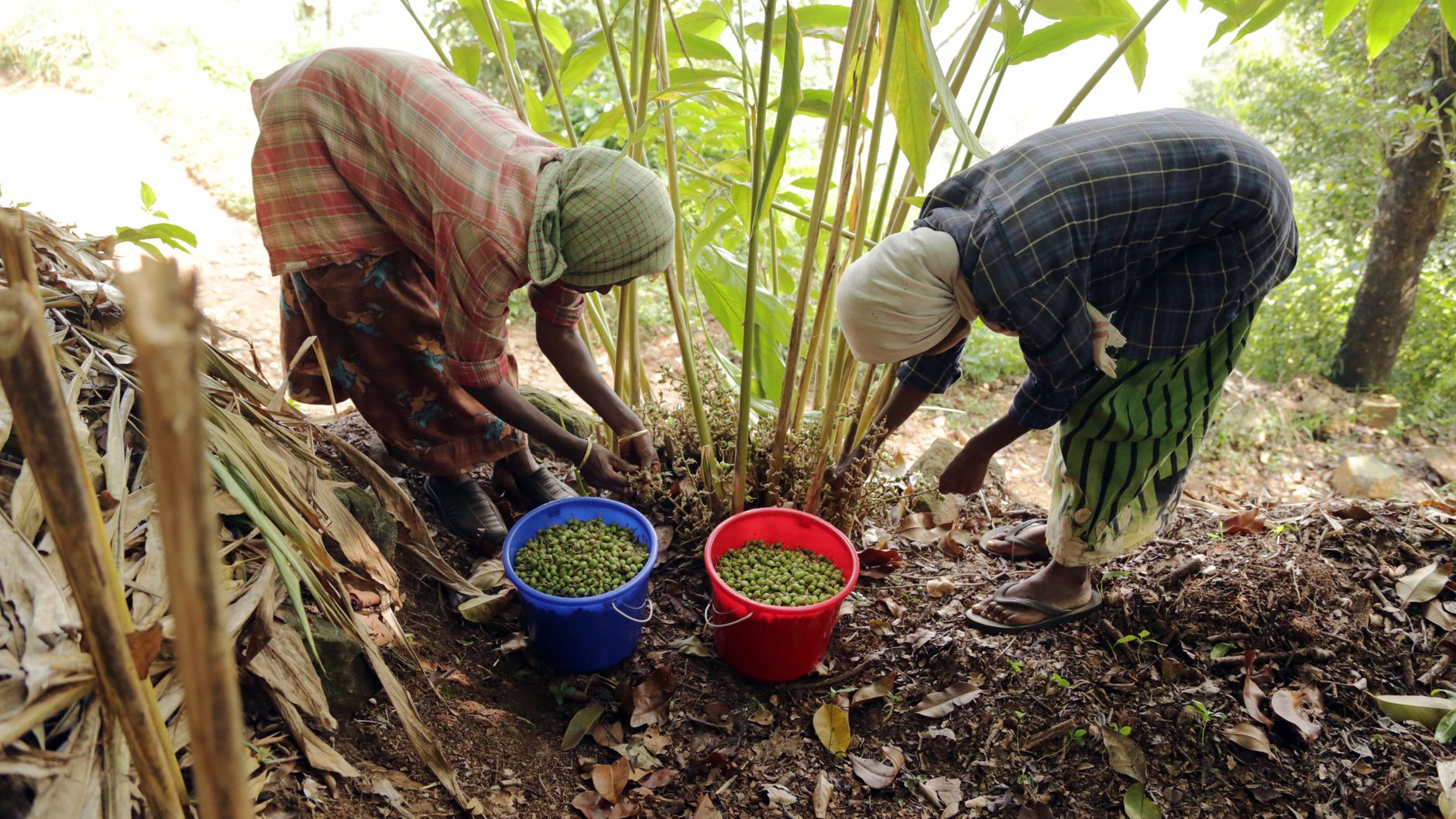
Three hours into the Cardamom Hills above Thekkady, an organic spice plantation spanning eighty acres produces pepper, cardamom, vanilla, and nutmeg without chemical intervention. The estate’s owner—a former Bangalore architect who returned to his family’s land—conducts private walking tours explaining the symbiotic relationships between crops, the specific altitude required for optimal cardamom, the patient wait for vanilla orchids to fruit. Lunch, prepared by the estate chef using vegetables from the kitchen garden and spices picked that morning, occurs in a colonial-era bungalow overlooking the plantation’s geometric precision.
Similar encounters with artisanal producers create the substance of bespoke culinary tours India makes possible through established relationships. In Kodaikanal’s high valleys, a boutique cheese maker produces European-style cheeses from jersey cow milk—the altitude and climate allowing bacterial cultures that cannot survive in the plains. The tasting occurs in his aging caves, where wheels of Gouda and Camembert mature alongside more experimental varieties incorporating Indian flavours: cumin, fenugreek, Kashmiri chilli.
Darjeeling’s tea gardens reveal their secrets through private estate tours unavailable to casual visitors. At Makaibari, the world’s first biodynamic tea estate, the proprietor explains the distinction between first flush and second flush, demonstrates orthodox tea processing in hundred-year-old machinery, and conducts comparative tastings of single-estate varietals in the plantation bungalow. The experience illuminates tea’s complexity—terroir, processing, oxidation levels—in ways that transform tea drinking from habit to conscious appreciation.
In Old Delhi’s Chandni Chowk, fourth-generation halwa makers still cook ghewar and sohan halwa in brass kadhais over wood fires, their techniques unchanged since their great-grandfathers supplied the Mughal court. Access to their workshops—narrow rooms above street-level shops, perpetually fragrant with ghee and cardamom—comes only through introduction. Similarly, Hyderabad’s heritage vermicelli makers demonstrate the hand-pulling technique that creates thread-thin strands for seviyan, while Rajasthan’s pickle preservers explain the year-long maturation process for lemon and mango pickles, offering tastes from jars labeled with decades-old dates.
Regional Gastronomic Immersion: Curated Multi-Destination Culinary Trails
India’s culinary diversity—arguably greater than all of Europe’s—demands itineraries connecting distinct regional traditions. A properly designed gastronomic journey might begin in Kerala’s coastal backwaters, where private boat tours access village toddy shops and fishermen’s cooperatives, with meals prepared on the houseboat by a chef trained in Syrian Christian coastal cuisine. From there, private aviation connects to Amritsar, where the Golden Temple’s community kitchen—feeding 100,000 people daily—opens its operations to privileged observers, followed by private meals with Punjabi families in their Ludhiana farmhouses.
The journey continues to Kolkata, where morning visits to flower markets and fish bazaars precede private dining experiences with Bengali families during Durga Puja, when home cooking reaches its annual pinnacle. Then to Hyderabad, for biryani tutorials with khansamas whose families have prepared the dish for Nizam’s descendants, followed by heritage walks through the old city’s irani cafes and Osmania biscuit bakeries. Each destination reveals not merely different dishes but entirely distinct culinary philosophies, ingredient palettes, and cultural contexts.
These exclusive food tours India creates through multi-regional itineraries include access to celebrations and seasonal events invisible to conventional tourism: Kerala’s Onam feasts with their twenty-four-dish sadya, Kashmir’s autumn walnut harvest with traditional preparations in Srinagar houseboats, Goa’s monsoon cashew-apple festivals in private plantation estates, Coorg’s coffee harvest celebrations in planter bungalows.
Throughout such journeys, cultural interpreters and culinary historians provide context that transforms eating into understanding—explaining how Portuguese colonialism shaped Goan cuisine, how Partition influenced Punjabi food culture, how geography determined Kerala’s spice trade wealth, how caste systems created parallel culinary traditions within single regions.
Crafting Your Bespoke Gastronomic Journey Through India
These experiences—palace dinners, chef masterclasses, artisanal producer encounters, multi-regional gastronomic trails—represent starting frameworks rather than fixed itineraries. Royal India Holidays designs entirely personalised culinary journeys based on your specific fascinations: whether you’re drawn to vegetarian temple cuisine or Mughlai meat preparations, interested in ancient Ayurvedic food principles or contemporary fusion innovation, seeking coastal seafood traditions or landlocked wheat-based cuisines.
Perhaps you wish to focus on a single region’s culinary depth—three weeks exploring Bengal’s complexity from Darjeeling tea estates through Kolkata’s street food archaeology to the Sundarbans’ fishing villages. Or perhaps you prefer a survey approach, touching multiple culinary regions while maintaining the exclusivity and refinement essential to your travel style. Some guests request thematic focuses: bread-making across regions, the evolution of biryani from Persia through India, vegetarian cuisine’s infinite variety, dessert traditions from milk-based Bengali sweets to grain-based Punjabi preparations.
Each journey incorporates the practical intelligence essential to genuine luxury: private transportation between culinary destinations, accommodation in heritage properties with distinguished kitchens, advance preparation for dietary preferences or restrictions, management of pace to prevent palate fatigue, strategic spacing of intense culinary experiences with cultural and architectural explorations.
What remains consistent across all variations is the level of access: these experiences exist beyond commercial availability, accessible only through the relationships, cultural knowledge, and established trust that Royal India Holidays has cultivated across three decades. The palace dinner cannot be booked independently. The chef’s private tutorial requires introduction. The artisan’s workshop opens only to known connections. The heritage family’s dining room welcomes only invited guests.
Your inaugural journey to India deserves this level of curation—where every meal tells a story, every kitchen reveals heritage, and every culinary encounter creates understanding that extends far beyond flavour. We invite you to begin a conversation with our specialists about the gastronomic journey that matches your particular interests, allowing us to design an entirely unique culinary exploration of this endlessly fascinating country.