


Watching a Bengal tiger emerge from sal forest shadows at dawn, accompanied only by India’s foremost conservation expert in your private safari vehicle, represents wildlife travel at its most privileged. This is not the crowded safari experience documented in travel blogs—this is luxury tiger safari India as it should be: deeply personal, scientifically enriching, and utterly transformative. The difference lies not merely in thread count or champagne vintages, but in access itself—to closed forest zones, to conservation scientists, to knowledge accumulated over decades of dedicated fieldwork. For travellers who have tracked gorillas in Rwanda and leopards in the Serengeti, India’s tiger reserves offer something increasingly rare: genuine wilderness combined with a level of naturalist expertise unmatched anywhere on earth.
The Indian subcontinent shelters roughly 3,000 Bengal tigers—70% of the world’s remaining wild population. Yet only a handful of reserves offer the infrastructure, exclusivity, and ecological integrity worthy of serious wildlife enthusiasts. These premier destinations balance conservation imperatives with carefully managed tourism, creating opportunities for encounters that respect both the animal and the landscape. Your experience depends entirely on three elements: location selection based on current tiger activity, accommodation with genuine territorial advantage, and access to specialist naturalists whose knowledge transforms observation into understanding.
India’s forest departments release safari permits exactly 120 days in advance, with prime zones at premier reserves selling out within hours. Royal India Holidays secures priority allocations through established relationships, guaranteeing optimal timing and territory access impossible to arrange independently.
Ranthambore: Royal Hunting Grounds Turned Premier Tiger Safari Destination
Ranthambore occupies a singular position in India’s conservation narrative—a former Maharaja’s hunting reserve transformed into the subcontinent’s most celebrated tiger sanctuary. The dramatic landscape of the Aravalli and Vindhya ranges creates theatrical backdrops: tenth-century ruins emerging from fig tree roots, stepped wells reflecting forest canopy, fortress walls where tigers lounge in afternoon heat. But Ranthambore’s distinction extends beyond scenery. With approximately 75 tigers across ten safari zones, the reserve offers not just sighting probability but genuine intimacy—the chance to observe individual animals whose territories, personalities, and lineages your naturalist knows as thoroughly as his own family.
Zone selection determines everything. Zones 1 through 5 hold the highest tiger density, but only private bespoke tiger safari tours secure consistent access to these premium territories during optimal morning hours. The celebrated tigress T-19, known as Krishna, patrols Zone 3’s lake margins. Her daughter Riddhi commands Zone 2’s forested valleys. Your naturalist—whether it’s Fateh Singh Rathore’s proteges or independent trackers with 30-year tenures—reads pug marks in dust, interprets alarm calls from chitals and langurs, and positions your vehicle not where tigers were, but where they’re going. This predictive expertise, combined with radio communication networks between guides, creates encounter opportunities that appear effortless but require encyclopaedic territorial knowledge.
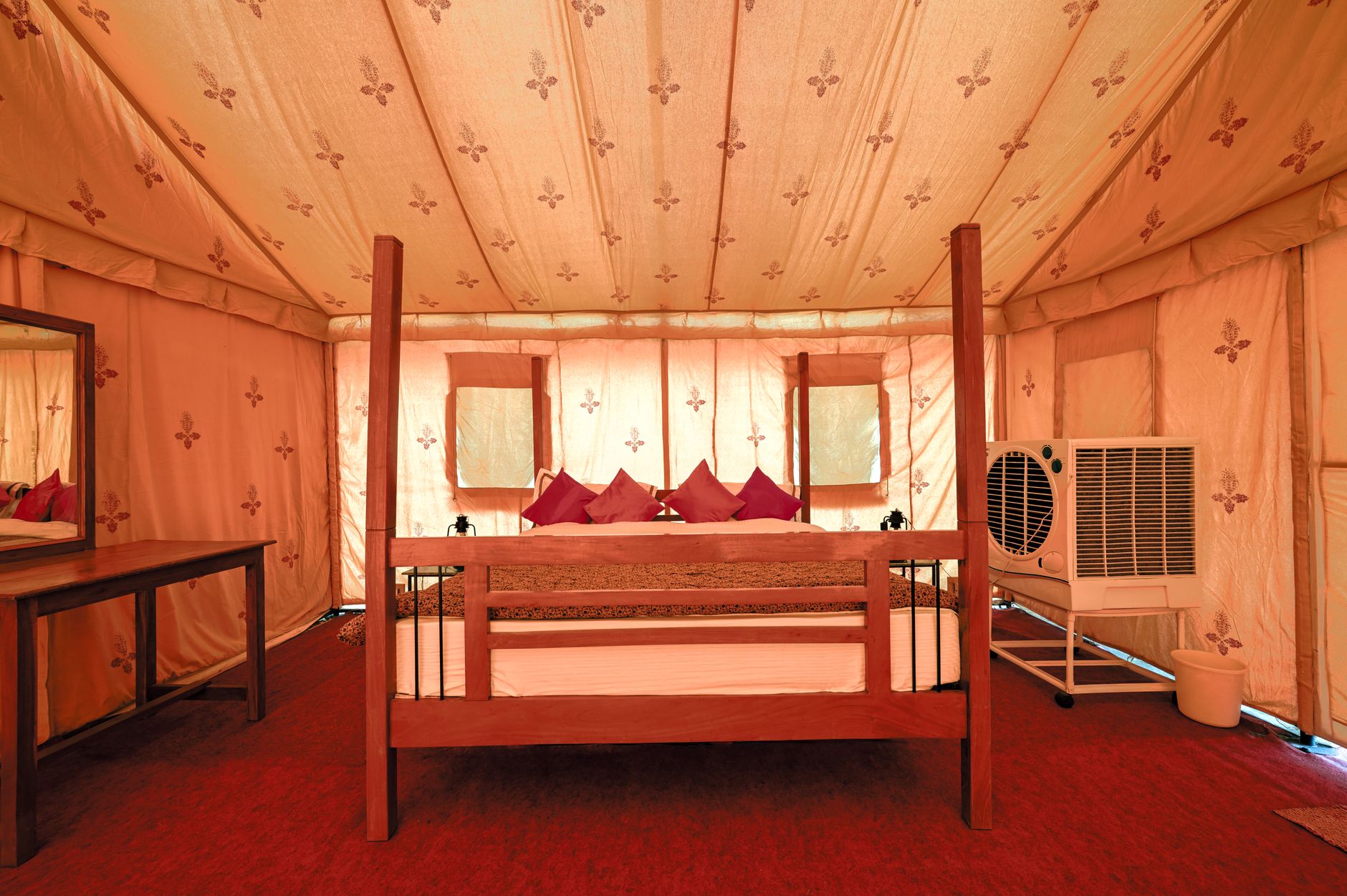
Accommodation at Ranthambore reflects two distinct philosophies. Aman-i-Khás offers Mughal-inspired tented luxury on a private 25-hectare reserve, with just ten pavilions ensuring absolute tranquility between safaris. The Oberoi Vanyavilas channels Rajput palace architecture, complete with private butler service and temperature-controlled plunge pools. Both properties arrange exclusive experiences impossible to replicate: champagne breakfasts beside Rajbagh Lake after private sunrise safaris, behind-the-scenes meetings with Project Tiger field directors, after-hours access to Ranthambore Fort when day-visitors have departed. This is the privilege of staying at properties whose decade-long community relationships open doors—quite literally—that remain closed to standard tourism.
Bandhavgarh and Kanha: Central India’s Pristine Tiger Heartland
Central India’s reserves in Madhya Pradesh represent the evolutionary birthplace of modern tiger conservation. Bandhavgarh claims India’s highest tiger density—the Tala zone alone sustains populations that would challenge entire reserves elsewhere. The topography differs markedly from Ranthambore: where Rajasthan offers drama, Bandhavgarh provides intimacy. Ancient caves honeycomb cliff faces. Grasslands transition abruptly into dense sal forest. The famous Charger bloodline—legendary male tigers known for their size and temperament—originated here, and current dominant males frequently patrol the meadows near Samode Safari Lodge with almost proprietorial confidence.

Tala zone access represents the single most valuable commodity in private tiger reserves India offerings. Forest department restrictions limit daily vehicle numbers, and only accommodations with grandfathered territorial permissions guarantee consistent Tala entry during peak tiger activity hours. Samode Safari Lodge and Mahua Kothi—the latter a Taj property with just twelve cottages—maintain these coveted permissions. Your pre-dawn departures put you in position as tigers complete nocturnal hunts and begin morning patrols. The light at this hour transforms photography: low sun illuminates dust motes in golden beams, backlit tigers appear almost translucent, and the forest’s architecture—layered depths of vegetation—reveals itself completely.
Three hours south, Kanha National Park sprawls across 940 square kilometers of meadow and forest—the landscape that inspired Rudyard Kipling’s Jungle Book. Where Bandhavgarh offers concentration, Kanha provides scale. Tigers here traverse vast distances, requiring different tracking strategies. The reward? Photographic opportunities unmatched elsewhere: tigers crossing misty grasslands at dawn, silhouetted against distant sal forest; tigresses leading cubs across open meadows in perfect sight lines. Taj’s Baghvan commands exceptional positioning on the park’s periphery, with private buffer zone access for walking safaris and night drives—activities prohibited in core zones but revelatory for understanding nocturnal jungle rhythms.
The difference between competent and exceptional tiger tracking lies not in technology but in patient observation—reading territorial markers, interpreting bird alarm sequences, understanding that the forest communicates constantly if you learn its vocabulary.
Multi-reserve itineraries combining Bandhavgarh and Kanha require careful choreography. Road transfers consume six hours; helicopter charters reduce this to 45 minutes while providing aerial perspectives of tribal villages, forest corridors, and the extraordinary Phen Sanctuary connecting both parks. Royal India Holidays arranges continuity through expert naturalists who accompany your entire Central Indian journey, building comprehensive understanding rather than fragmented experiences. This approach—treating tiger tracking as cumulative education rather than isolated sightings—separates luxury wildlife travel from mere animal spotting.
Pench and Tadoba: Off-the-Beaten-Path Excellence for Connoisseur Wildlife Travellers
For travellers who have exhausted Ranthambore’s celebrity tigers and Bandhavgarh’s reliable densities, Maharashtra’s Tadoba-Andhari Tiger Reserve offers something increasingly precious: wilderness without infrastructure saturation. Tadoba shelters approximately 115 tigers across 625 square kilometers of teak forest and bamboo thickets—populations equivalent to premier Madhya Pradesh reserves, yet visitor numbers remain a fraction of northern destinations. The result? Safari experiences approaching genuine isolation, where four-hour drives might encounter only two other vehicles, and tiger sightings unfold without jostling crowds recording on mobile devices.

Jamtara Wilderness Camp exemplifies exclusive wildlife lodges India philosophy: just six tented suites positioned on a private concession bordering Kolsa zone—Tadoba’s most productive tiger territory. The property’s intimacy allows personalized scheduling impossible at larger lodges. Want to depart at 5:00 AM instead of the standard 6:00 AM slot? Your dedicated naturalist adjusts accordingly. Prefer focusing on tiger behaviour rather than checklist wildlife spotting? Your guide tailors commentary to match sophistication level. This flexibility, combined with exclusive access to transitional buffer zones where forest department regulations relax slightly, creates opportunities for walking safaris and ethno-botanical explorations that contextualize tiger ecology within broader landscape dynamics.
Pench Tiger Reserve, straddling Madhya Pradesh and Maharashtra, offers Kiplingesque landscapes of rounded hills, teak forests, and the Pench River meandering through prime territories. Maya, Collarwali, and other celebrated tigresses have produced remarkable documentation of maternal behavior—cubs learning hunting techniques, territorial boundary negotiations, sibling dynamics extending into sub-adult years. Chhatrasaal Lodge positions itself strategically near Turia gate, providing access to zones where tiger photography benefits from open understorey and superior sight lines. The property’s owner—himself a naturalist with 25-year Pench tenure—leads select safaris personally, sharing insights accumulated through direct observation rather than second-hand ranger reports.
Seasonal timing dramatically affects tiger encounters across all reserves. October through November, post-monsoon, finds tigers establishing territorial boundaries before mating season. December through February offers optimal photographic light and maximum comfort—neither extreme heat nor humidity. March through April, as temperatures soar beyond 40°C, concentrate tigers near remaining water sources, creating predictable encounter opportunities. May and early June—immediately pre-monsoon—push tigers into desperate water dependency, but heat becomes genuinely testing. Royal India Holidays tailors timing recommendations to individual priorities: pure sighting probability, photographic quality, comfortable conditions, or minimal tourist overlap.
Beyond the Safari: Exclusive Conservation Access and Bespoke Wildlife Experiences
The distinction between luxury and ultra-luxury wildlife travel manifests most clearly beyond safari vehicles. True connoisseur experiences involve access to India’s conservation infrastructure itself—meetings with field directors who manage decades-long tiger monitoring programs, conversations with veterinarians who’ve treated animals from infanthood through senescence, participation in research activities that reveal conservation’s complexity. These encounters aren’t marketed publicly; they emerge through relationships cultivated over years between premier travel companies and forest department leadership.
Royal India Holidays arranges private audiences with figures like Dr. Raghu Chundawat, whose leopard and tiger research spans four decades, or Belinda Wright, founder of the Wildlife Protection Society of India and instrumental in anti-poaching intelligence networks. These conversations—conducted over private dinners at your lodge or during field visits to active research sites—transform abstract conservation into tangible human endeavor. You examine camera trap footage not yet analyzed, review radio-collar data tracking movement patterns, understand political challenges balancing tribal community rights with wildlife corridors. This intellectual dimension elevates wildlife travel beyond observation into genuine engagement with conservation’s frontlines.
Helicopter surveys offer perspectives impossible from ground level: observing territorial ranges from above, understanding how human settlements fragment habitats, witnessing the extraordinary forest department coordination required to manage seasonal migrations. Qualified guests with advance arrangements can observe radio-collaring operations—veterinary teams tranquilizing animals for health assessments, biometric data collection, and GPS unit attachment. These opportunities require appropriate credentials, conservation body affiliations, and extensive advance coordination, but they represent wildlife access at its most privileged—participant rather than spectator status in ongoing research.
Beyond wildlife focus, bespoke itineraries integrate cultural and architectural dimensions that contextualize conservation within India’s broader narrative. Private fort dinners at Ranthambore’s Raj Mahal Ruins. Helicopter transfers to Alsisar Mahal—an eighteenth-century merchant’s haveli in Shekhawati—for frescoed courtyards and textile collections. Village immersions with Baiga tribal communities in Kanha’s buffer zones, understanding traditional forest resource management predating British colonial forestry by millennia. These complementary experiences honor the truth that India’s wild places exist within, not separate from, complex human landscapes with deep cultural histories.
Crafting Your Perfect Luxury Tiger Safari India Experience
Exceptional luxury jungle safari India experiences emerge from interlocking elements that independent travelers struggle to coordinate: guaranteed accommodation at properties with genuine territorial advantage, secured six months advance when premier lodges release limited inventory; priority safari permits in optimal zones booked the moment forest department reservations open 120 days prior; naturalist selection matching your sophistication level and specific interests; seamless ground logistics including private charter flights between reserves, eliminating exhausting road transfers; and conservation access requiring established institutional relationships impossible to develop individually.
Royal India Holidays curates these elements into coherent journeys that honor both wildlife and your time. Our approach begins with detailed consultation: understanding whether you prioritize pure tiger sightings, photographic excellence, conservation education, or comprehensive biodiversity exploration. We then construct itineraries balancing multiple reserves for taxonomic diversity—Ranthambore for dramatic landscapes, Bandhavgarh for density and reliability, Tadoba for authentic wilderness, and Kanha for photographic grandeur—while ensuring sufficient time at each destination for genuine depth rather than superficial sampling.
Our naturalist network includes specialists whose expertise spans ethno-botany, avian ecology, carnivore behavior, and conservation policy. This allows matching guide to guest: serious photographers work with naturalists who understand light, composition, and animal behavior prediction; conservation professionals engage with guides conversant in policy challenges and research methodologies; families receive naturalists skilled in translating complex ecology into accessible narratives that engage younger travelers. This curatorial approach—treating naturalist selection as seriously as accommodation choice—reflects understanding that guides determine experience quality more profoundly than any infrastructure element.
India’s tiger reserves represent wildlife travel’s pinnacle—places where conservation success creates opportunities for encounters rivaling anything Africa offers, delivered with intellectual depth and naturalist expertise unmatched globally. But accessing these experiences at the level they deserve requires navigation far beyond standard tourism infrastructure. It requires relationships cultivated over decades, understanding of bureaucratic systems that bewilder outsiders, and commitment to conservation principles that prioritize animal welfare over tourist convenience. This is what Royal India Holidays provides: not merely itineraries, but doorways into India’s wild heart, opened through expertise that transforms privilege into profound, lasting connection with one of earth’s most magnificent creatures.
Begin crafting your bespoke India tiger safari journey. Contact our wildlife specialists to discuss how we can design an experience reflecting your specific interests, timing requirements, and the level of exclusive access you seek within India’s premier reserves.


